



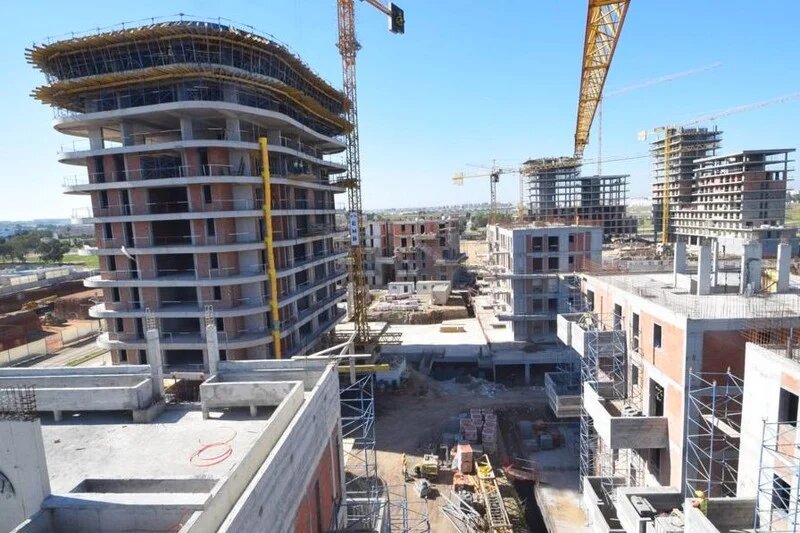
What began roughly two years ago as a targeted inquiry into a handful of prominent property developers in Casablanca and Marrakech has since widened into a sustained campaign by Morocco’s tax administration against fraud in the real estate sector, one of the country’s largest and most opaque industries.
The original investigation, first reported in late 2024, centered on developers behind high-profile projects in Casablanca and Marrakech who had drawn scrutiny over suspected large-scale tax evasion. Inspectors at the General Directorate of Taxes (the DGI, Morocco’s national tax authority) flagged sizeable gaps in the companies’ remote, electronically filed declarations, which triggered on-site audits of specific firms.
Much of the early evidence came from lawsuits already filed against the developers by construction firms and equipment suppliers alleging fraud and unpaid debts. When investigators compared those claims against the companies’ books, they found recurring signs of underreported income. Developers were accused of understating the value of construction work, manipulating invoices and payment receipts, and pressuring contractors to accept reduced payments. In some cases, suppliers said their equipment had been seized to recover money they were owed.
Complaints also pointed to a practice known in Morocco as the noir, or off-the-books cash economy, in which developers were said to channel work through a web of subcontractors to keep transactions out of official records and reduce their tax exposure. To test the firms’ real financial position, inspectors cross-checked their filings against data held by other arms of the state. They found mismatches between declared accounts and actual asset movements, including the purchase of luxury vehicles at inflated prices, a pattern consistent with inflating costs while hiding profits. The inquiry eventually broadened to the sale of individual housing units, where authorities identified widespread evasion of the tax on capital gains from property sales, particularly on advance payments collected for units in Casablanca, Marrakech, and Tangier.
In the time since, the case has evolved from a discrete probe into part of a broader structural shift in how Morocco polices property money. The decisive change has been technological. The DGI now relies on an automated data cross-referencing system that links each taxpayer to records held across the state through their national ID number. Banks are required to report significant transactions, the national land registry (the ANCFCC) records every property transfer, and the road safety agency (NARSA) tracks vehicle purchases. A lifestyle that visibly outpaces declared income, an expensive home, a luxury car, frequent travel, can now automatically prompt a full review of where the money came from. Powers introduced under the 2025 Finance Law explicitly extended this scrutiny beyond traditional salaried employees and registered companies to the informal economy where much real estate cash has long circulated.
The net has also reached across borders. In 2025, Moroccan exchange-control and tax authorities, acting in part on alerts from European counterparts in France and Spain, launched joint audits of suspicious property purchases made by foreigners. According to reporting by Hespress, three developers, two in Casablanca and one in Marrakech, were placed under in-depth audit in a first wave. Investigators found that part of the true value of sales to foreign buyers had been disguised by recording artificially low prices on paper, cutting the tax owed, while the balance was paid abroad through intermediaries. At least one of the developers remained under separate investigation by Morocco’s exchange-control services over illicit currency transfers.
The legal framework has since hardened further. In February 2026, the DGI issued Note Circulaire 737, the official guidance implementing the tax measures of Finance Law 50-25, which strengthens requirements for traceable payment and pushes property transactions to reflect genuine market value, directly targeting the undervaluation tactics at the heart of the developer cases.
Facing the prospect of large back-tax bills, many of the developers caught up in the original inquiry are reported to have turned to lawyers to negotiate settlements with the tax authority. Those with the strongest incentive to settle quietly are firms tied to public-sector projects or to financing partnerships with major banks, for whom a drawn-out fraud dispute carries reputational as well as financial risk.