


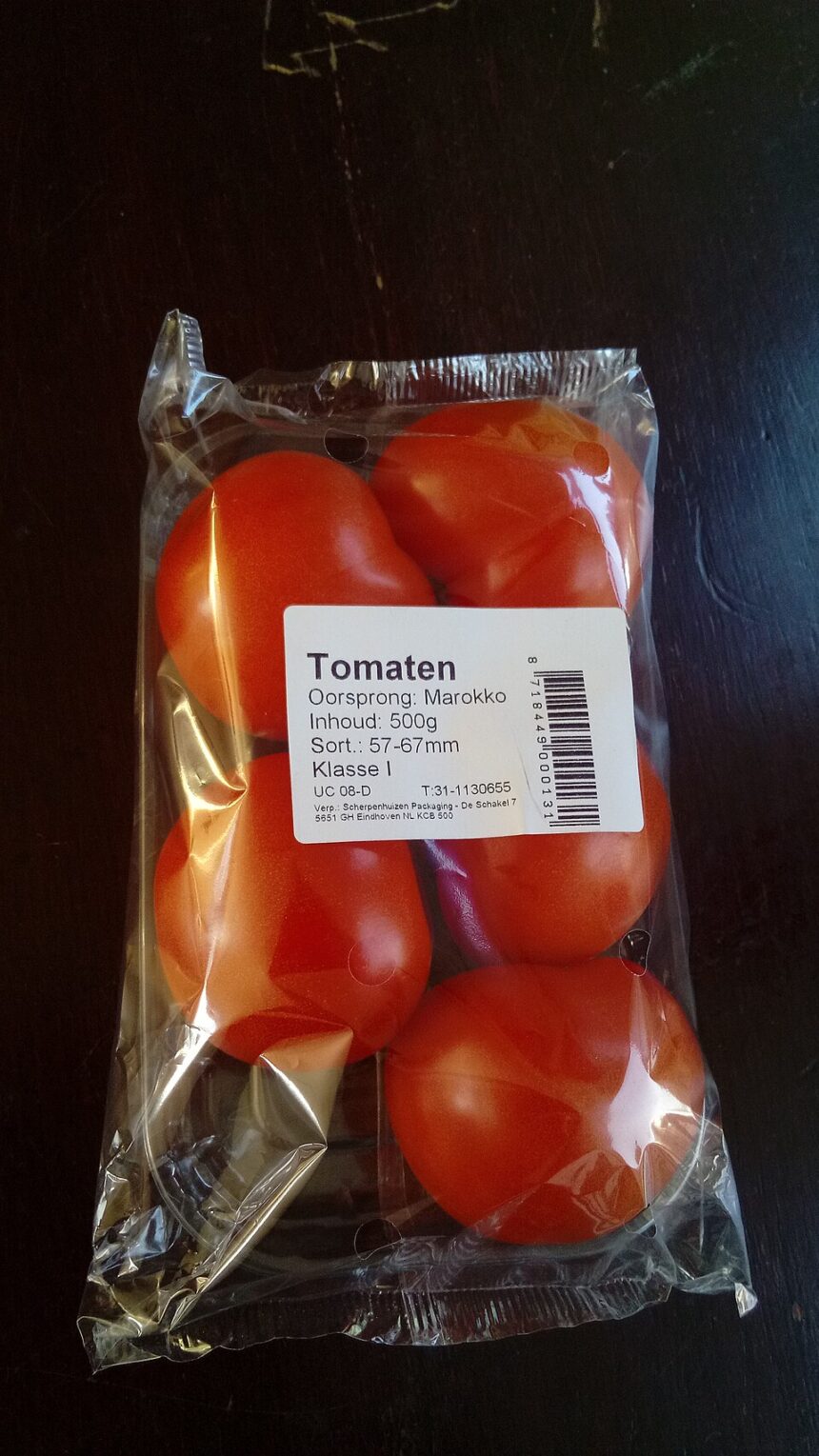
As France’s own tomato marketing season gets underway, industry figures have noticed a softening in the criticism that French growers have long directed at the volume of Moroccan tomato exports, which they have viewed as distorting competition.
The shift coincides with the rollout of an agreement reached between French producers, represented by Légumes de France, a trade body for the country’s vegetable growers, and their Moroccan counterparts, represented by APEFEL, the Moroccan Association of Fruit and Vegetable Producers and Exporters. The deal functions as a declaration of intent to cooperate and share expertise on the technical, agricultural, and health aspects of production rather than as a binding trade pact.
Sylvestre Bertucelli, director general of Légumes de France, has previously said the aim is for Moroccan producers to “find their place” in the market without coming into conflict with French growers. For their part, Moroccan producers have repeatedly denied that the agreement requires them to halt exports to the French market during the French season, meaning the summer months.
A source at APEFEL told Hespress, the day after the declaration was signed during the 2025 edition of the International Agriculture Fair in Meknes, known as SIAM and one of the largest agricultural exhibitions in Africa, that the text calls for the two sides to exchange data on tomato production volumes and growing areas beginning this year.
Khalid Saidi, president of APEFEL, said French tomato growers have so far shown no reaction to Moroccan exports reaching France. He suggested that the agreement signed last year may have calmed French farmers somewhat. Even so, he was firm that the deal was never premised on suspending Moroccan tomato exports over the summer. According to Saidi, the French side initially promoted the agreement as containing exactly such a restriction, a claim APEFEL quickly rejected, after which the matter went quiet.
Abdelaziz Maanaoui, president of the Chtouka Association of Agricultural Producers, offered a practical explanation for why the friction has eased. Moroccan tomatoes, he said, reach France during a window when French domestic production is naturally weak. French growers, he noted, begin harvesting around June, roughly when the Moroccan export season ends and producers turn to preparing for the next cycle.
Maanaoui added a wrinkle, however. Some Moroccan farmers whose crops were damaged by recent bad weather are only now reaching the market with their tomatoes, pushing a portion of Moroccan supply later than usual. At the end of February, the Souss-Massa region in southern Morocco, the country’s main horticultural production zone around Agadir and including Chtouka Aït Baha province, was hit by strong winds and sandstorms that damaged roughly 5,000 hectares of farm infrastructure. The greenhouses heavily relied upon for tomato growing were especially affected.
The resulting delay in some Moroccan growers supplying the market, Maanaoui stressed, is a temporary, one-off consequence of having to replant after the storms. The underlying pattern, he said, holds firm: early June marks the end of the Moroccan tomato season.