
Morocco’s stock market has become one of the most talked-about in Africa. After three strong years, the Casablanca Stock Exchange posted a historic 2025, then went through a sharp correction in 2026. For foreign investors, that raises two questions: what is really driving the market, and how can a non-Moroccan buy Moroccan shares at all? This guide explains the MASI index, what lies behind its rise and fall, and the practical steps to invest from abroad.
What is the MASI?
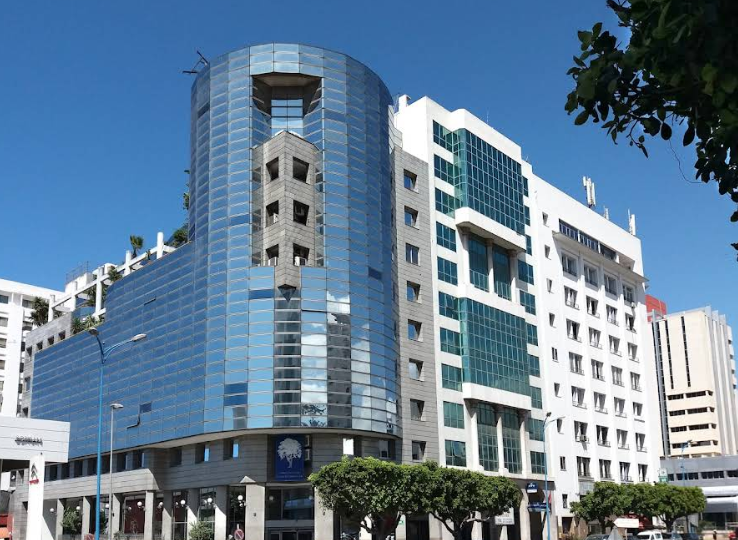
The MASI (Moroccan All Shares Index) is the benchmark of the Casablanca Stock Exchange (Bourse de Casablanca). As its name says, it tracks every share listed on the exchange, weighted by free float. Three related indices are often quoted alongside it:
- MASI 20: the 20 most liquid stocks, which are also the basis of the futures contract launched in 2025.
- MASI Mid and Small Cap: smaller and medium-sized companies.
- MASI ESG: companies with the best environmental, social and governance ratings.
The market is dominated by banks (Attijariwafa Bank, Banque Centrale Populaire, Bank of Africa), telecoms (Maroc Telecom), mining (Managem), construction and building materials, real estate and private healthcare. Prices are quoted in Moroccan dirhams (MAD).
A record 2025: the MASI gained 27.6%
2025 was one of the best years in the exchange’s history. The MASI closed the year at 18,846.35 points, up 27.57%, and market capitalisation reached a record of more than MAD 1,040 billion (about USD 110 billion), up more than 38% in a year, according to the exchange’s annual figures reported by Médias24. At its peak in August 2025, the index touched an all-time high of about 20,340 points.
In US dollar terms, the gains were even larger for foreign investors. The MSCI Morocco index returned 39.5% in 2025, after 19.8% in 2024 and 22.8% in 2023, according to MSCI.
Three strong years for foreign investors
MSCI Morocco index, annual return in US dollars
Why the Moroccan stock market has been growing
1. Lower inflation and lower interest rates
After the inflation shock of 2022–2023, prices in Morocco calmed down quickly: average inflation was below 1% in 2025, according to the IMF. Bank Al-Maghrib cut its key rate to 2.25%. Lower rates make bank deposits and bonds less attractive and push Moroccan savers towards shares. Analysts at Financial Afrik name controlled disinflation, lower rates, a recovery in investment and more liquidity as the main drivers of 2025.
2. The World Cup 2030 and an infrastructure boom
Morocco is investing heavily in high-speed rail, airports, ports, stadiums and energy ahead of the 2030 FIFA World Cup, which it co-hosts with Spain and Portugal. Listed construction and building-materials companies have been among the biggest winners: the “industrial equipment” sector, home to construction groups such as TGCC and SGTM, rose more than 255% in 2025, according to Le360. Our Morocco investment statistics page tracks the figures behind this programme.
3. The return of IPOs
For years, almost no new companies listed in Casablanca. That has changed. Since 2020, the exchange has welcomed Aradei Capital, TGCC, Disty Technologies, Akdital, CFG Bank, CMGP Group, Vicenne, Cash Plus and SGTM, and T2S Group followed in July 2026. The construction group SGTM’s listing in December 2025 was the second-largest IPO in the exchange’s history after Maroc Telecom in 2004, and attracted around 173,000 subscribers, a record (Morocco World News). New listings bring sectors such as healthcare, technology and fintech onto a market long dominated by banks and real estate.
4. A solid economy
Morocco’s economy grew by an estimated 4.9% in 2025, according to the IMF, with record tourism, rising foreign direct investment and a fast-growing automotive export industry. Listed companies have kept increasing their profits, even during the 2026 correction.
5. A deeper, more modern market
In 2025 the exchange launched its first derivatives market, with a futures contract on the MASI 20. The stated aim is to deepen the market and win back “emerging market” status at MSCI, which downgraded Morocco to “frontier” in 2013 (AllAfrica).
2026: the correction
Investors should know that the rise has not been a straight line. After the record 2025, the MASI fell about 12% between 20 February and 3 March 2026, one of the sharpest drops among African and European markets in that period (Financial Afrik). Tensions in the Gulf played a part, but Moroccan analysts point mainly to domestic causes: profit-taking after several very good years, investors pulling money out of mutual funds (OPCVM), and high valuations on the most popular stocks.
After a partial recovery in spring, the market fell again from late summer. At the end of October 2026 the MASI stood at 16,537.91 points, down 12.25% since January, according to La Vie éco. The research house BKGR says a lasting recovery will depend on money flowing back into shares, bond yields stabilising and further profit growth. In early November the index rebounded by more than 7% in a few sessions, and on 11 November it closed at 17,429.80 points, down 7.52% for the year (Boursenews).
The MASI’s rise and correction
Moroccan All Shares Index, closing level in points
The contrast is striking: share prices have fallen while company profits have kept rising, a gap that CFG Research has highlighted (Le Matin). For long-term investors, a correction like this can make valuations more reasonable. It is also a reminder that this is a small, volatile market.
How to invest in Moroccan stocks as a foreigner
Foreigners face no restrictions on owning shares in Moroccan listed companies, and they do not need a local partner. Foreign investors currently hold only around 3% of the market’s total capitalisation and about 11% of the shares that actually trade, according to a CFA Institute Research Foundation brief, so the market is still mainly driven by Moroccan savers. There are three main ways in.
Foreign investors are still a small minority
Share held by foreign investors
Option 1: Buy shares directly in Casablanca
- Open a convertible dirham account. Under Morocco’s foreign-exchange rules, foreign individuals and companies, resident or not, can open an “account in convertible dirhams” at a Moroccan bank, funded with money transferred from abroad (Office des Changes). This account matters: it is what lets you send your money and profits back home.
- Open a securities account with a brokerage firm. Shares are bought through a licensed brokerage firm (société de bourse) authorised by the market regulator, the AMMC. The main ones are subsidiaries of the big banks, such as Attijari Intermédiation, BMCE Capital Bourse, CDG Capital Bourse and CFG Bank, alongside independents such as Capital Trust Securities. Expect to provide a passport, proof of address abroad and your bank account details. Some brokers let you open an account remotely.
- Place your orders. Trading runs on weekdays in Moroccan time. Brokerage fees are typically around 0.3% to 0.6% per order, with a minimum charge per order.
- Repatriate freely. Investments made in foreign currency through the convertible account can be transferred back abroad, including dividends and sale proceeds. Morocco’s exchange-control rules allow foreign investors to repatriate assets listed on the Casablanca Stock Exchange freely (Oxford Business Group). Keep every transfer record.
Many brokers’ websites and documents are in French, and sometimes only in French. Some foreign investors with large amounts use their home bank or a global custodian with access to the Casablanca market instead.
Option 2: Moroccan mutual funds (OPCVM)
If you do not want to pick individual stocks, Moroccan asset managers offer equity funds (OPCVM) that invest in a basket of listed shares. They are sold through banks and asset managers, and the same convertible-account rules apply.
Option 3: International funds and ETFs
The simplest route for most Western investors is indirect. There is no widely available ETF that invests only in Morocco, but Moroccan stocks appear in frontier-market and Africa funds that track indices such as the MSCI Frontier Markets index, where Morocco has become one of the largest weights. You can buy these through an ordinary broker at home, in dollars or euros. The drawbacks: Morocco is only one part of the fund, and fees are higher than for mainstream ETFs. Check each fund’s current list of holdings before buying.
Taxes for non-residents
- Capital gains: non-residents are generally exempt from Moroccan tax on gains from selling shares listed in Casablanca, except shares of real-estate companies (PwC). You may still owe tax in your home country.
- Dividends: Morocco deducts a withholding tax at source. The 2023 Finance Law cut the rate step by step from 15% to 10% (EY). A tax treaty between Morocco and your country may change the rate or let you credit the Moroccan tax at home.
Tax rules change and depend on your situation, so check with a tax adviser in your country of residence before investing.
Risks to keep in mind
- Volatility: the 2026 correction shows the market can lose more than 10% in a few weeks.
- Liquidity: outside the largest stocks, trading volumes are small, and selling a position quickly can be hard.
- Currency: your returns depend on the dirham against your home currency. The dirham is pegged to a basket of the euro and the US dollar.
- Access and information: in its 2026 market accessibility review, MSCI kept Morocco in the frontier category, citing limited information in English, foreign-exchange rules and weaknesses in clearing and settlement (Morocco World News).
- Concentration: a handful of banks, telecoms and mining stocks carry much of the index.
The bottom line
The Moroccan stock market has grown on real foundations: falling inflation and interest rates, a wave of new listings, a booming infrastructure programme and solid company earnings. The 2026 correction has cooled valuations after a record year. For foreign investors, direct access is open and reasonably simple, through a convertible dirham account and a local broker, while frontier-market funds offer an easier, if less targeted, way in. As with any small, volatile market, invest only money you can leave in place for several years.
This article is for information only and is not investment advice. Morocco To Invest does not recommend buying or selling any security.