

Morocco has found itself unexpectedly in the crosshairs of a White House report accusing more than 40 countries of serving as way stations in a global scheme to help China evade US tariffs. Alongside Kenya, the kingdom is the only African country named in the report’s functional map, according to Moroccan outlet Hespress.
The document, titled “The Great Transshipment Scam,” was released on August 13 by the White House Office of Trade and Manufacturing Policy, led by trade adviser Peter Navarro. It sorts more than 40 flagged economies into three tiers based on their scale, their integration with Chinese supply chains, and what it calls “weak-link advantages” that make them attractive to China-linked exporters looking to disguise the origin of goods bound for the US market.
Where Morocco sits — and why
The report places Morocco and Kenya together in Tier 3, which it describes as “small, opportunistic Chinese targets” — smaller economies with lower absolute transshipment volumes but specific comparative advantages that make them attractive opportunistic targets for China-linked rerouting.
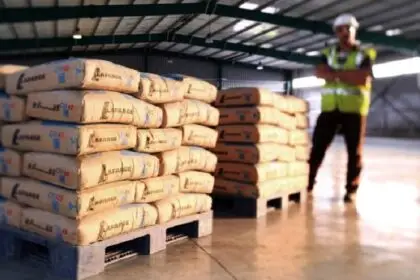
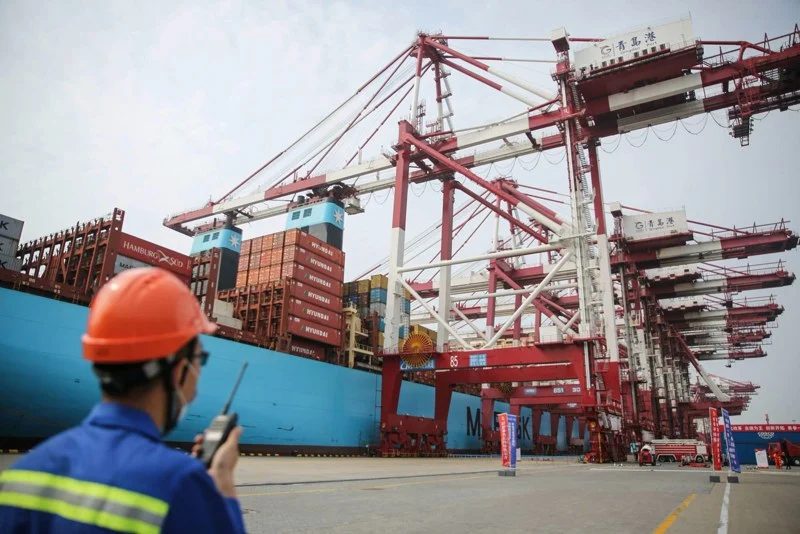
Those advantages, the report says, include low-cost labor, permissive free-trade-zone rules, weak customs enforcement, strategic port access, bonded warehousing, niche assembly capacity, and preferential access to the US market relative to China. Moroccan ports, according to the document, sit among globally strategic hubs close to free-trade zones that can be used as passageways for China-linked flows and to facilitate the movement of goods through arrangements that have formed a worldwide reshipment network.
Chinese-linked exporters, the White House argues, are drawn to Africa — and to Morocco and Kenya in particular — not for the biggest dollar volumes, but to exploit specialized comparative advantages for repackaging, light assembly, or the modification of country-of-origin documentation, allowing them to escape high tariffs. Africa’s ports and special economic zones, the report adds, function as key access points along circuitous shipping routes toward global markets.
The wider architecture
Tier 1, labeled “Diversified Scale Leaders,” names Canada, the European Union, India, Israel, Japan, Mexico, South Korea, and Taiwan — major US trading partners whose enormous volumes of legitimate trade, the administration argues, provide statistical cover for illicit flows. Tier 2 groups Brazil, Indonesia, Malaysia, Thailand, Turkey, and Vietnam as economies with deeper structural ties to Chinese manufacturing and logistics.
Tier 3, the broadest category, includes Argentina, Azerbaijan, Bangladesh, Cambodia, Chile, Colombia, Costa Rica, the Dominican Republic, Georgia, Jordan, Kazakhstan, Kenya, Laos, Morocco, Myanmar, Oman, Panama, Peru, the Philippines, Singapore, Sri Lanka, Switzerland, and the United Arab Emirates.
Overall, the report reviews five separate government and private-sector estimates of the value of illicitly shipped goods, ranging from $40 billion to $303 billion annually, with associated US customs revenue losses estimated in the tens of billions of dollars each year. The economic analysis inside the document argues that transshipment displaces hundreds of thousands of American jobs and reduces national GDP.
How the scheme works — and how Washington plans to fight it
The White House describes illegal transshipment as relying on multiple mechanisms — relabeling, repackaging, reinvoicing, and light manufacturing operations that fall short of the “substantial transformation” required by trade rules to legitimately change a product’s origin. These practices, the report says, exploit differences in tariff rates between countries to generate profit through consolidated shipping and preferential trade agreements.
To counter the phenomenon, the report announces the development of a new AI-powered surveillance system dubbed “Detective Border.” The system, still being rolled out, is designed to integrate shipping data, track container routes, analyze relationships between companies, and verify the actual production capacities of factories in intermediary countries.
The caveats worth keeping in mind
Two caveats deserve attention. First, the report itself acknowledges that the shift of US imports away from China toward other countries does not prove that all displaced Chinese trade has been illegally rerouted — some of it reflects legitimate changes in production, investment, and sourcing. Trade experts have long noted that policing this area is genuinely difficult.
Second, the report is a political document as much as a technical one. Produced by Navarro’s office, it opens with an illustration of a Trojan horse made of shipping containers, and its author has said publicly that the findings “will be part of the reciprocal trade negotiations” ahead. In other words, being named in Tier 3 is not the same as being formally accused of wrongdoing — but it does put Morocco on a diplomatic watchlist that could reshape its trading conditions with Washington.
For a country that has built its recent industrial strategy around attracting Chinese investment in electric vehicles, batteries, and renewables — while positioning itself as a bridge to the European and American markets — the inclusion in this list is, at minimum, a signal to watch. How Rabat responds, and how convincingly it can demonstrate the substance of its own manufacturing base, will help determine whether the “weak-link” label sticks.