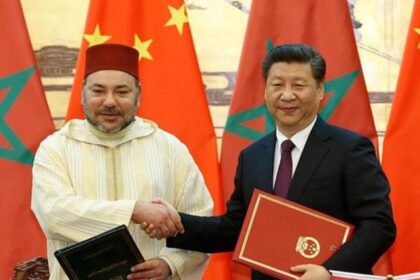

The Moroccan national team’s sustained success at the World Cup is once again lifting the country’s profile in the global tourism market, while strengthening the “Morocco” brand as an instrument of soft power.
Experts believe the promotional windfall Morocco reaped after its run at Qatar 2022 is set to renew itself, and with force, in 2026 — particularly across the markets of North and South America.
Abbas El Ouardi, a political analyst and professor of international law at Mohammed V University in Rabat, pointed to Morocco’s push to create platforms for spreading ideas of moderation and centrism and for anchoring core humanitarian principles that transcend borders. “We are witnessing a football diplomacy that has shown in concrete terms that Morocco has its own standing and example — through making a difference, through respect, love and the rejection of hatred, and through producing exceptional, positive results that carry the voice of Africa, the Arabs and Muslims at the 2026 World Cup,” he told Hespress.
El Ouardi stressed that these signs confirm Morocco as an exception in refinement led by King Mohammed VI, whom he described as the country’s foremost sportsman and a consistent advocate for diplomacy accompanying every field, sport among them, given the international throngs who visit the stadiums and see Moroccan football organization, affection and attachment to the homeland firsthand.
The analyst pointed to expressions of that attachment through the national anthem, love of king and country, the spreading of goodwill, and the building of channels of communication with the peoples of the host nations — Canada, Mexico and the United States. He highlighted Mexico’s decision to grant residents time off to watch Morocco’s match as a strong signal of affection and of the Moroccan presence, as well as the American welcome extended to fans and to the national team.
That favor shown to the team by the United States, he added, is a powerful indication of the role royal diplomacy plays in spreading and cementing these values on the ground, casting the Kingdom in an image of love, centrism, moderation and success.
El Ouardi concluded by affirming Morocco’s continued march of distinction and progress, noting that the national team proved its strength by climbing to sixth place in the FIFA world rankings — no small feat, especially after earning the respect of the Netherlands’ “Oranje,” known for their toughness and fighting spirit.
Zoubir Bouhout, a tourism expert, said the national team and the Moroccan public together form an integrated brand for promoting Morocco, for two main reasons counted on to affirm the Kingdom’s outreach. He explained that the team’s successes trigger what he called a “positive curiosity effect,” whereby seeing a small Arab and African nation succeed on the pitch prompts the world to form an impression that it succeeds across all its sectors — tourism included.
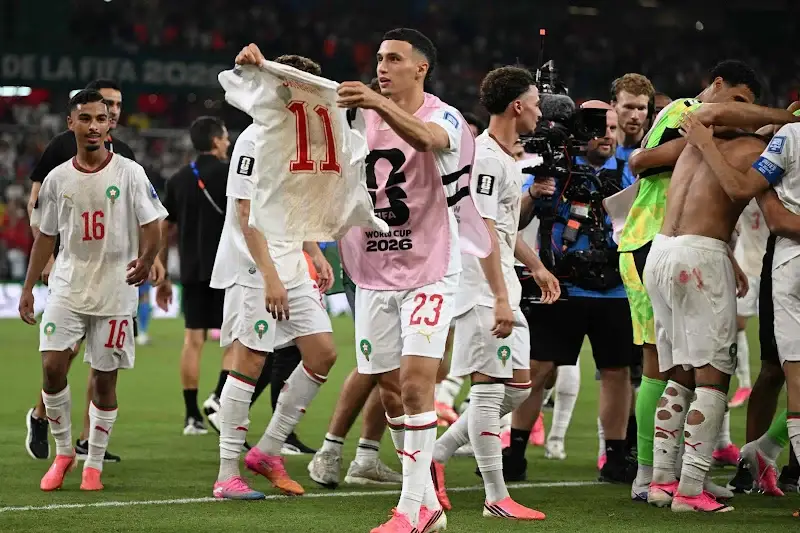
As for the Moroccan public, Bouhout told Hespress that supporters play a role in embedding values of hospitality and tolerance through their positive, cheerful and lively engagement with rival fans and teams, citing the exchange of shirts between Moroccans and Scots ahead of their match. Such civilized behavior, he added, presents an honorable image confirming that the Moroccan public is welcoming — reinforcing Morocco’s reputation for hospitality worldwide.
The tourism expert noted a wide gap in ambition between the 2022 World Cup in Qatar and the horizon of the 2026 and 2030 tournaments; where the goal once went no further than reaching the second round, the ceiling today is set far higher. Meeting those ambitions, he stressed, will require more positive results from the team, alongside a public that continues to display the finest civilized conduct to entrench this appealing image.
Bouhout reviewed the Moroccan team’s journey and its encounters with the world’s great footballing schools, pointing to the earlier draw with Brazil and the millions who followed the videos reflecting Moroccans’ respect for family values and hospitality and their distance from fanaticism. He noted that the schedule includes possible clashes with other schools such as Canada, Spain, France and perhaps Argentina, making continued victories and the best conduct essential.
He concluded by raising the strategic importance of playing these matches in major and significant global markets — the nations of North America (the United States, Canada and Mexico), along with an opening onto South American countries such as Brazil. These markets, he affirmed, are highly vital for Morocco and must be developed, much like the European market, where Morocco enjoys a strong and sizable presence that draws millions of tourists.