
Officers from Morocco’s Royal Armed Forces have arrived in Israel to take part in discussions on the future of the International Stabilization Force (ISF), the body charged with keeping the peace under the second phase of the Gaza ceasefire plan brokered by U.S. President Donald Trump. The development was reported on the social platform X by the page of the Board of Peace, a body created this past January to oversee the governance and reconstruction of the Palestinian territory.
Citing officials, foreign media reported that the Moroccan military delegation, made up of four officers, arrived on 18 June at the international force’s headquarters in southern Israel, where it is expected to help shape the force’s overall structure and contribute expertise in several areas, including policing.
The Israeli newspaper The Jerusalem Post reported that Morocco, Albania, and Greece had joined the force, and indicated that Morocco and Indonesia would form two of its largest peacekeeping contingents. The same Israeli outlet described the arrival of the Moroccan officers as a possible early operational step toward activating the long-delayed multinational force, while stressing that the officers would take part in planning only and had not been deployed inside Gaza at this stage.
According to that reporting, the officers’ arrival at the force’s headquarters carries particular weight because Morocco had already been listed among the countries expected to contribute, and the move signals that the Moroccan commitment is shifting from public pledges toward operational readiness.
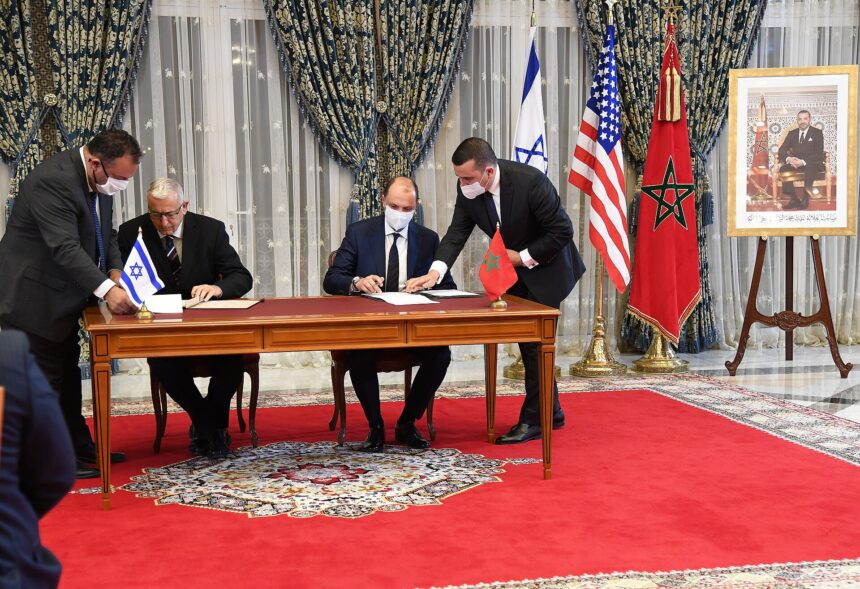
The Israeli source noted that Morocco’s role is an especially sensitive and significant one. The country normalized relations with Israel under the 2020 Abraham Accords, the series of U.S.-brokered agreements through which Morocco, the United Arab Emirates, Bahrain, and Sudan established or restored ties with Israel, and it has maintained a distinct defense relationship with Israel since then. A Moroccan role in the postwar security arrangements for Gaza would therefore carry considerable diplomatic weight, the report suggested, particularly among Arab and Muslim countries still weighing whether to take part in the U.S.-backed plan.
It remains unclear, the same source added, whether Rabat will ultimately send combat troops, police personnel, or a smaller support team. For now, Moroccan involvement appears limited to planning, but in the context of the faltering postwar security arrangements for Gaza, even a small Moroccan presence could be an early sign that the international force is beginning to take shape.
Morocco, alongside the United Arab Emirates, was among the first countries to make a financial contribution to the Board of Peace, the body established by the U.S. president to support stability in Gaza. The board counts a number of capitals among its members, Rabat among them. Morocco’s foreign minister, Nasser Bourita, oversaw the signing of its founding charter in Davos, Switzerland, in early January.
Palestinian officials, in earlier comments to Hespress, said Morocco has historically been one of the most prominent supporters of the Palestinian cause, noting that this support is not only financial but also includes advocacy for the Palestinian people’s right to an independent state with East Jerusalem as its capital. (For context, Morocco’s King Mohammed VI chairs the Al-Quds Committee, an Organisation of Islamic Cooperation body concerned with the status of Jerusalem, which is the source of Morocco’s longstanding claim to a special role on the issue.)