
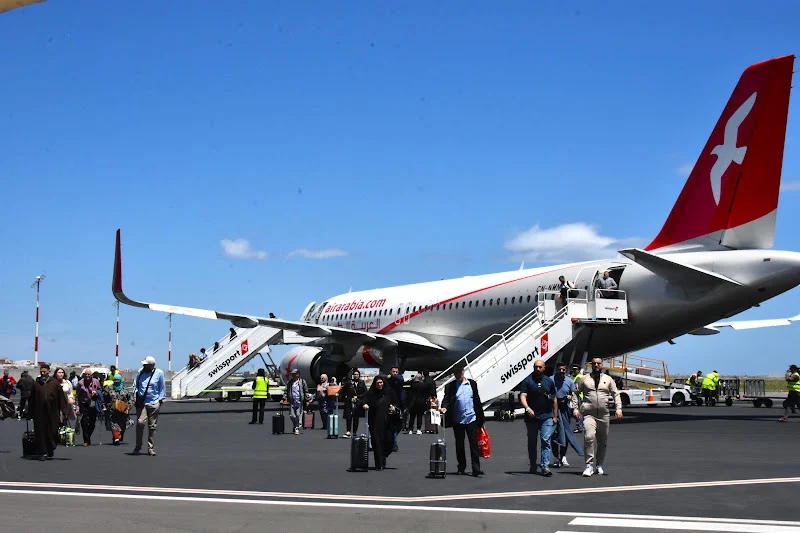
Air passenger traffic in Morocco climbed past 12.3 million travelers in the first four months of 2026, marking a 9.7 percent increase over the same period a year earlier, according to the country’s Directorate of Studies and Financial Forecasts, a research arm of the Ministry of Economy and Finance that monitors economic trends.
In its latest economic briefing, the directorate noted that the growth was broad-based. International traffic rose 9.5 percent, while domestic flights within Morocco expanded even faster, gaining 11.1 percent.
The gains extended across nearly every major international market. Traffic with Europe, by far Morocco’s largest aviation market thanks to tourism and a sizeable Moroccan diaspora in countries such as France, Spain, and Belgium, grew 9.6 percent. Routes to sub-Saharan Africa rose 19.6 percent, while combined traffic with North and South America jumped 23.9 percent. Flights to and from the neighboring Maghreb countries of North Africa, among them Algeria, Tunisia, Libya, and Mauritania, increased 13.7 percent.
The lone exception was traffic with the Middle East and the Far East, which slipped 4.6 percent overall. The decline was concentrated in April alone, when it fell 37.5 percent in a single month, a drop the directorate attributed to ongoing geopolitical tensions in the region.
Air cargo followed a similar upward path, rising 11.8 percent by the end of April, compared with 15.1 percent growth recorded a year earlier.
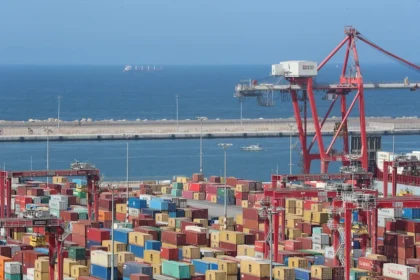
Morocco’s seaports told much the same story. The country’s national ports handled a total of 63.3 million tons of commercial goods through the end of March 2026, an increase of 4.3 percent. That growth was driven largely by imports, up 10.7 percent, and by ship refueling, known in the industry as bunkering, which rose 4.3 percent. Bunkering is a meaningful business for Morocco given the major Tanger Med port on the Strait of Gibraltar, one of the world’s busiest shipping lanes. Offsetting those gains were a 30 percent drop in domestic coastal shipping and a slight 1.9 percent decline in exports.
Among the strategic categories of goods passing through Moroccan ports in the first quarter, grains surged 33.7 percent and imported fuels rose 16.9 percent. Phosphate and its derivatives, a flagship national export given that Morocco holds the world’s largest phosphate reserves and ranks among the top global suppliers through the state-owned OCP Group, edged up 2.8 percent. Coal climbed 17 percent and new automobiles rose 8.2 percent, reflecting Morocco’s emergence as a major car-manufacturing and export hub home to large Renault and Stellantis plants. Container traffic, by contrast, fell 1.9 percent, and international road freight, the cargo trucks that cross borders often by ferry, declined 5.8 percent to settle at 147,535 units.
Sea passenger traffic, finally, reached 718,720 travelers through the end of March, a slight dip of 0.8 percent.
Source: Hespress, citing MAP (Maghreb Arabe Presse, Morocco’s official state news agency) — Friday, 26 June 2026