
National accounts data from the High Commission for Planning (HCP) has sketched a mixed picture of Morocco’s economy in the first quarter of 2026, blending positive signals driven by domestic demand with warning signs tied to a slackening pace of investment and non-agricultural activity, according to economic analysts.
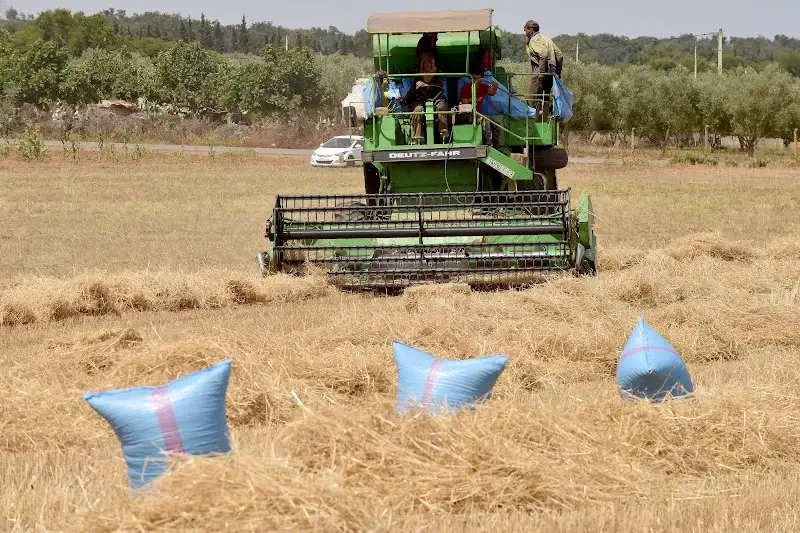
For Zakaria Firano, professor of economics at Mohammed V University in Rabat, the report’s central point is that overall growth held roughly steady at 4.6%, down from close to 5% in the same period a year earlier. That stability, he told Hespress, conceals a structural shift in the composition of growth: non-agricultural output slowed sharply from 4% to 2.6%, while the agricultural sector rebounded strongly with growth exceeding 18%. The divergence points to a key conclusion — that agricultural value added remains a volatile yet vital component offsetting weakness elsewhere, though this recovery is essentially climatic, linked to better rainfall after successive years of drought rather than any structural leap in productivity.
The industrial picture
Breaking down non-agricultural GDP, Firano attributes the decline to a slowdown in secondary sectors returning to their normal levels. Extractive industries fell back, weighed down by global demand and prices, while manufacturing raised concern with a 1.3% contraction driven by weak external demand tied to Europe’s economic situation and rising input costs. Energy also slowed, growing just 3.4% amid softer industrial demand, and continued positive growth in construction reflected a slowdown in the scheduling of public investment and the fading momentum of reconstruction. The strongest support in the tertiary sector came from financial services, which grew 7.6% on the back of robust lending activity.
Household consumption drives growth
Firano’s reading aligns with the analysis of researcher and economic analyst Mohamed Adel Icho, who agrees that household consumption remains the primary engine of growth at this stage. Firano noted that household spending posted a significant jump of 4.6%, compared with 1.1% a year earlier, propelled by lower inflation, improved agricultural income and remittances from Moroccans living abroad, which lifted disposable national income by 6.8%. Icho describes this as the optimistic side of the ledger, stressing that domestic demand is leading growth after registering 6.5% against 6.4% a year ago, with its contribution to economic growth rising from 5.3 points to 6.9 points — proof, he says, that the domestic market, not exports, is the economy’s main driver today.
That internal momentum extends to the vital role of the state through public consumption, with Icho pointing to an acceleration in government spending from 3.5% to 4.9%, casting the state as an “automatic stabilizer” of economic activity through wages, social transfers and direct support programs.
Yet this strong appetite for domestic consumption carries a clear effect on the external sector. Firano notes that domestic absorption outpacing production drove a 12.7% surge in imports to meet consumption, energy and capital-goods needs; and although exports grew 9.2%, the gap worsened the net trade balance — a result he attributes to an absorption gap rather than any weakness in export competitiveness.
The investment dilemma — an alarm bell?
The analysis turns more cautious when examining investment rates, the structural point of concern that Icho dwelt on and that echoed Firano’s warnings. Icho explains that investment is slowing in ways that raise major questions, with the pace of gross fixed capital formation falling from a robust 19.6% to just 10.8%, trimming its contribution to growth from 4 points to 3.4 points.
That figure, he told Hespress, reveals a structural economic problem: growth built on consumption alone remains fragile, because consumption powers the daily cycle without securing the future, whereas investment builds genuine productive capacity by opening factories, creating stable jobs and raising competitiveness. The slowdown, according to Icho, raises two fundamental questions — the first concerning the business climate and whether small and medium-sized enterprises can find liquidity and clear visibility to invest, the second tied to the pace at which major projects and public investment, the lifeblood feeding those enterprises, are rolled out.
For his part, Firano singles out the retreat in manufacturing as the point most deserving of attention, given its bearing on productive transformation and the future path of exports. At the same time, he notes that Morocco’s economy still self-finances the bulk of its investments, with savings reaching 31.4% of GDP against an investment volume of 32.9%, leaving a limited need for external financing of about 1.5%.
The overall picture is one of growth powered strongly by consumption — positive in the short term, as it reflects a relative improvement in citizens’ economic circumstances thanks to inflation being brought under control at 1.1%, yet a decline that may prove temporary and tied to agricultural supply, warranting monetary caution, as Firano noted.
Both researchers agreed that the real, twofold challenge lies in how to sustain the momentum of domestic consumption while restarting the engine of investment — by accelerating the public projects tied to the New Development Model and restoring private-sector confidence — so that a fleeting numerical growth is not the end goal, but is translated into sustainable jobs and a tangible improvement in Moroccans’ standard of living.