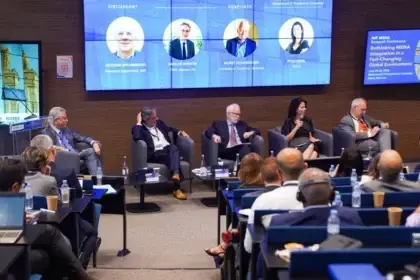

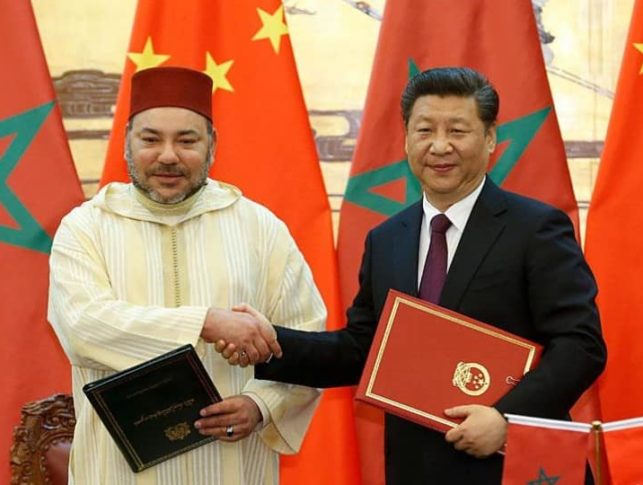
RABAT — Morocco and China signed three customs agreements on Friday in Brussels, on the sidelines of the World Customs Organization’s annual session, in a move aimed at strengthening their strategic partnership and making bilateral trade safer and more efficient. The deals were inked by Mohamed Zahoui, Director General of Morocco’s Customs and Indirect Tax Administration, and Zhang Baofeng, Deputy Minister of China’s General Administration of Customs.
According to Morocco’s customs authority, the agreements are designed to deepen cooperation against customs fraud, secure global supply chains and advance the digital transformation of customs services. The first is a memorandum of understanding on mutual administrative assistance, establishing a legal framework for exchanging information and conducting joint operations to prevent, detect and combat violations — with a particular focus on under-invoicing and false declarations, better risk management, and the protection of public revenues while easing legitimate trade.
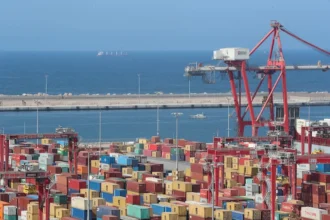
The second provides for mutual recognition between Morocco’s Authorized Economic Operator (AEO) program and its Chinese counterpart, allowing both administrations to streamline procedures and offer greater predictability to traders. Moroccan officials say the arrangement will sharpen the competitiveness of Moroccan firms in the Chinese market while reinforcing the Kingdom’s role as a regional hub for trade, logistics and investment. The third links the ports of Casablanca and Ningbo through a memorandum covering customs modernization, risk management, trade facilitation, data analysis and staff training, and aims to speed up requests for administrative assistance between the two sides.
The signings land at a moment of unusual momentum in the relationship, which both governments are marking this year as the tenth anniversary of the strategic partnership established by President Xi Jinping and King Mohammed VI in 2016. That framework has matured from a diplomatic understanding into one of Africa’s most consequential bilateral relationships, and the numbers reflect it: bilateral trade crossed the $10 billion threshold for the first time in 2025, up more than 20 percent year-on-year, with China remaining Morocco’s third-largest global trading partner and its largest in Asia. Chinese investment commitments have surpassed $10 billion, concentrated in industrial parks, automotive components, renewable energy and textiles.
Much of that activity flows through Morocco’s status as a logistics gateway, which gives Friday’s customs cooperation its practical weight. Morocco was the first African country to join China’s Belt and Road Initiative, signing a memorandum of understanding in November 2017 and becoming the first North African state to conclude a joint BRI implementation plan in January 2022. Flagship projects have followed — the Mohammed VI Tanger Tech City, which has drawn dozens of mostly Chinese firms in electric-vehicle batteries and high-end manufacturing, alongside Chinese involvement in the Kenitra-Marrakech high-speed rail extension. The smoother, more predictable customs procedures the new agreements promise are aimed squarely at the kind of cross-border manufacturing and re-export trade those investments depend on, with the Casablanca-Ningbo link tying one of Africa’s busiest ports to a major Chinese gateway.
The deals also build on recent diplomatic groundwork. They follow the seventh session of the Morocco-China Joint Commission for Economic, Trade and Technical Cooperation, held in Beijing in December 2025, where both sides agreed to deepen customs cooperation, and come months after Beijing extended zero-tariff access to exports from African countries that maintain diplomatic ties with China — a policy Rabat has welcomed as a chance to widen its export base, particularly in agri-food and cosmetics. Morocco’s customs administration described Friday’s signings as a new milestone in cooperation between the two countries.
The deepening tilt toward Beijing is not without friction. Much of the Chinese capital flowing into Morocco is geared toward serving European markets, and the roughly $6 billion that has entered the Kingdom since the pandemic has drawn scrutiny in Brussels, where some officials have characterized it as the rerouting of Chinese industrial overcapacity through trade partners. That tension underscores the balancing act behind agreements like these: Morocco is working to convert its China partnership into concrete commercial machinery without unsettling the European Union, which remains its largest trade partner.