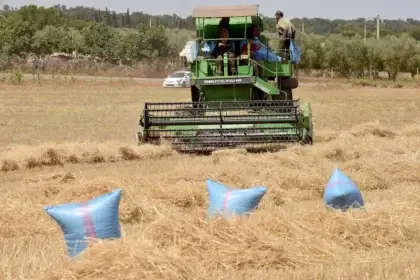




In Morocco’s Rif Mountains, a legal cannabis industry is slowly taking shape. Since the country legalized cultivation for medical, cosmetic, and industrial use in 2021, thousands of farmers have registered with the new regulatory agency — yet many remain caught between an established informal economy and the promise of a formalized one still finding its footing. The debate now unfolding in Rabat is not whether cannabis carries risks or opportunities, but how a country with deep cultural and economic ties to the plant can regulate it in a way that keeps small farmers at the center rather than pushing them aside.
To understand what lessons international experience might offer, we spoke with Matthias Humm, the new President of Swiss Cannabis Research, who succeeds Paul Good in the role. Humm brings extensive experience in addiction services, harm reduction, prevention, and cannabis policy. For twelve years he worked at the Drug Information Centre (DIZ) of the City of Zurich, where he built Switzerland’s first cannabis drug checking service, contributed to the national early warning system, and led the expert group on recreational drug use and nightlife. As President of Swiss Cannabis Research, he advocates for evidence-based regulation, the expansion of prevention services, and the scientific study of what actually happens when a cannabis market is regulated.
In the conversation that follows, Humm discusses how Switzerland’s pilot projects generate real-world scientific data, what the evidence says about cannabis and health, why projected tax revenues so often diverge from reality — and what Morocco should prioritize, and avoid, as it charts its own path.
MTI. How does Swiss Cannabis Research contribute to evidence-based cannabis policy? What is your approach to generating scientific findings that policymakers and society can rely on?
We conduct scientific pilot projects that generate real-world data on what happens when cannabis is legally supplied to registered adult residents under strictly controlled conditions.
Our projects in the Canton of Zurich (34 municipalities, approximately 7,500 participants) and the Canton of St. Gallen (43 municipalities, approximately 5,000 participants) are conducted in partnership with leading Swiss research institutions – including the University of Zurich and ETH Zurich. Participants are registered, receive lab-tested products from Swiss organic cultivation, and are systematically monitored. The results will be published as peer-reviewed research – regardless of what they show.
MTI. What does the scientific evidence actually show about cannabis use, particularly regarding brain development, mental health, and potential harms? What regulatory strategies have proven effective in minimizing these risks?
Cannabis is a well-researched substance. The scientific evidence presents a nuanced risk profile: the addiction potential is comparatively low, yet the risks – particularly for vulnerable groups — must be taken seriously. For adolescents and young adults, there is a particular risk: cannabis use during adolescence and early adulthood can impair brain development, as the brain continues to mature until approximately age 25. Furthermore, regular and high-dose use – regardless of age – can affect mental health: it can contribute to anxiety, depressive episodes and cognitive impairment. For individuals with a genetic predisposition, there is also a risk of triggering or exacerbating psychotic disorders. One of the greatest health risks of cannabis use concerns the damage caused by smoking – particularly when cannabis is mixed with tobacco, which is widespread in Europe. Added to this are the specific risks of the black market: products from uncontrolled sources may contain synthetic cannabinoids, residues of pesticides and fertilisers, and mould – contaminants that pose significant additional health risks.
The decisive policy question is therefore not whether cannabis carries risks, but whether those risks are better managed through prohibition or through regulation. Decades of prohibition have not prevented cannabis use. What they do prevent: quality controls, youth protection, and the ability to monitor and guide consumption. In a regulated market, the risks of the black market disappear – products are tested for purity, potency and contaminants before they are distributed.
MTI. Many governments legalize cannabis expecting significant tax revenue. What does international experience show about whether these projections actually materialize? What are the real financial outcomes?
International experience is mixed — and it cannot be generalised. Financial outcomes differ significantly from country to country and must always be considered within their respective economic, social and regulatory context.
In Colorado and California, tax revenues fell short of expectations because high taxes made legal cannabis significantly more expensive than black market products — leaving the illicit market more resilient than anticipated. Uruguay took a different approach: legal cannabis was deliberately priced below the black market rate. The result: organised illicit market trade was massively reduced — Uruguay is today considered one of the world’s most successful examples of black market displacement through a regulated system.
The lesson: tax revenue and black market displacement are often in tension. Those who prioritise revenue risk keeping the black market alive. This question — how high the price of legal cannabis can be before it drives consumers back to the black market — is one of the central questions in international cannabis regulation research, and one we are actively investigating in our pilot projects. The answers will provide valuable insights not only for Switzerland, but for other countries as well.
MTI. Morocco faces a unique situation: an informal cannabis sector and economic pressures in farming regions. What should Moroccan policymakers prioritize if they pursue legalization, and what mistakes should they avoid?
Morocco is formalising an existing industry that is deeply rooted in the culture and economy of the Rif region — and that sets it fundamentally apart from Canada, the United States or Switzerland, where cannabis is being regulated in an entirely different historical, social and economic context.
First, it seems essential that small farmers remain at the centre. Second, low barriers to entry are likely to be important, complex licensing requirements and high compliance costs could keep farmers in the informal economy. Third, the experience gained from the 2021 export framework for medical cannabis could serve as a foundation for further steps. Swiss Cannabis Research follows developments in Morocco with great interest and is happy to be available for exchange.