
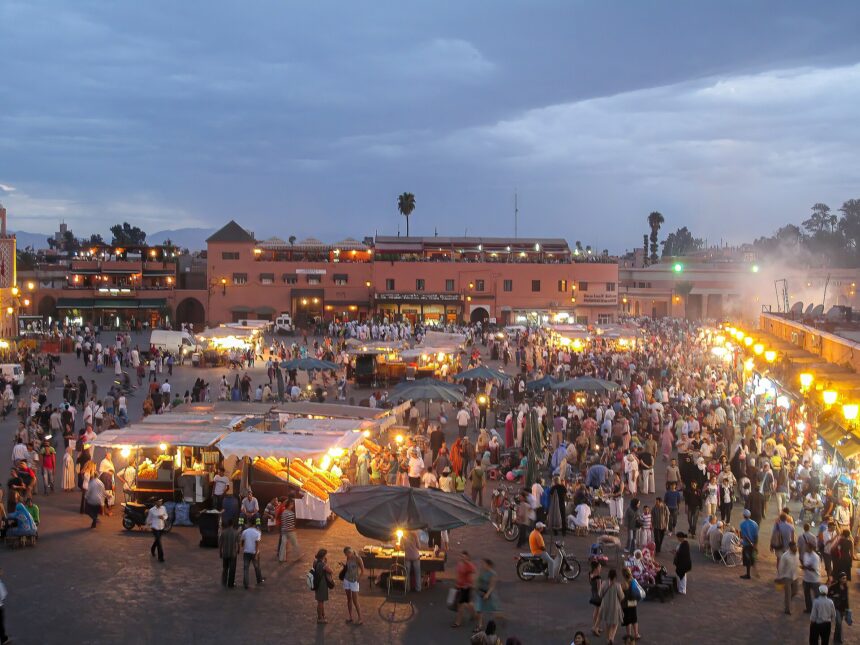
“Is Morocco safe?” is one of the most common questions Americans and Europeans type into Google about the kingdom. It usually comes with a picture in mind: crowded souks, a region next to the Sahel, a vague memory of a news alert. The data tells a different story. On the measures that matter most to a visitor — terrorism, political violence and the chance of being killed in a violent crime — Morocco today compares well with France, Belgium, Germany and the United Kingdom, and on some of them it does better.
That does not mean Morocco is risk-free. It has real problems, and we set them out below. But a traveller who happily books a weekend in Paris, Brussels or Barcelona has no statistical reason to treat Marrakech, Fez or Tangier as a more dangerous choice.
Terrorism: a zero score that Europe does not have
The Global Terrorism Index 2026, published by the Institute for Economics & Peace, placed Morocco in the “no impact” category with a score of zero, meaning no recorded terrorist incidents in the period measured. Morocco and Mauritania were the only North African states with that result.
Western and Central Europe cannot say the same. The same report counted 51 terrorism-related incidents and 14 deaths in the region in 2025. Germany ranked 29th in the world for terrorist impact, recording six deaths in five attacks, and France and the United Kingdom also recorded several incidents. Morocco’s record is the result of a long, proactive security strategy launched after the 2003 Casablanca bombings; the last major attacks affecting foreigners — the Argana café bombing in Marrakech in 2011 and the murder of two Scandinavian hikers near Mount Toubkal in 2018 — are now years in the past.
Overall peacefulness: Morocco 65th, France 99th
The Global Peace Index 2026 ranks 163 countries on 23 indicators covering domestic safety, conflict and militarisation. Morocco rose to 65th place with a score of 1.887, in the “high” peace category, and is the most peaceful country in the Maghreb. France came 99th with 2.083. The United States ranked 134th.
It is fair to note what the index measures: France is pulled down partly by its military spending, nuclear arsenal and foreign deployments, which do not affect a tourist on the Champs-Élysées. Belgium, at 21st, still ranks well above Morocco. But the headline result remains striking: on the world’s most widely cited peace ranking, Morocco sits 34 places ahead of Europe’s most visited country.
Washington puts Morocco in the same bracket as Europe
The US State Department rates Morocco at Level 2, “Exercise increased caution”, citing terrorism. That is exactly the same level it applies to France, Germany, Spain, Italy and the United Kingdom. In August 2026 Washington went further for one European territory: it raised Ceuta, the Spanish enclave on the Moroccan coast, to Level 3, “Reconsider travel”, after the mass border crossings of July. Canada advises a “high degree of caution” in Morocco and asks travellers to avoid the regions bordering Algeria and the Western Sahara frontier — areas no ordinary holidaymaker visits.
Violent crime: in line with Western Europe
Morocco recorded 1.7 intentional homicides per 100,000 people in 2023, according to UNODC data published by the World Bank — a third of the world average of 5.2. For comparison, France was at 1.3 and Belgium at 1.38, while Brussels reached 3.19, the second-highest regional rate in the EU. Germany, Italy and Spain are around 1. In other words, the risk of lethal violence in Morocco is of the same order as in Western Europe, and far below that of the United States or most of Africa and Latin America.
Pickpockets prefer Paris
For most travellers the real fear is not violence but theft and scams. Here, too, Europe holds the uncomfortable records. In a 2026 analysis of tourist reviews by Radical Storage, Paris was named the world’s pickpocket capital, accounting for 16.5% of theft-related reviews, ahead of Rome (10.7%) and Barcelona (5.3%). Another study found that more than 4% of all visitor reviews of Las Ramblas warn about petty theft. Marrakech’s medina has its hustlers — self-appointed guides, insistent sellers, inflated taxi fares — but these are irritations far more often than crimes.
The honest caveats
A credible answer to “is Morocco safe?” has to include what the rankings flatter less.
- The roads are the real danger. Morocco recorded 4,577 road deaths in 2025, up 25.5% in a year, and the WHO estimates a rate of about 17 deaths per 100,000 inhabitants — roughly five times that of Spain. Motorcyclists account for the largest share. For a visitor, a reckless taxi or a night drive on a mountain road is a far bigger risk than crime.
- Perceived safety is lower than official safety. In Gallup’s 2025 Global Safety Report, Morocco scored 78 out of 100 on the law-and-order index, and 68% of Moroccans said they feel safe walking alone at night, slightly below the global average of 73%. Women in particular report street harassment, and female travellers often describe unwanted attention in busy areas.
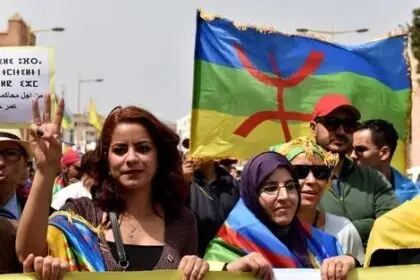
- Social tension is real. The GenZ 212 youth protests of autumn 2025 and the dramatic swim of tens of thousands of young people to Ceuta in July 2026 showed the frustration of a generation facing youth unemployment of around 29%. These events were not directed at foreigners, but they are a reminder to avoid demonstrations.
- Nature has its own risks. The 2023 Al Haouz earthquake near Marrakech, summer heat above 45°C and flash floods in the Atlas valleys all call for common sense.
Nearly 20 million people voted with their feet
The most convincing safety statistic may be the simplest one. Morocco welcomed a record 19.8 million visitors in 2025 and 15.7 million in the first nine months of 2026. Arrivals from Germany rose 14% in the first half of the year, from the Netherlands 10%, from France and the United States 9%. Tour operators, airlines and insurers — who price risk for a living — keep adding capacity: easyJet opened its first African base in Marrakech this year.
Practical advice
- Use licensed guides, agree taxi fares or insist on the meter, and keep valuables out of sight in the souks — the same precautions you would take in Rome or Barcelona.
- Avoid driving at night outside cities and choose reputable drivers for excursions into the Atlas.
- Keep emergency numbers at hand: police 19, Royal Gendarmerie (outside cities) 177, ambulance and fire 15. Marrakech and other tourist cities have dedicated tourist police.
- Stay away from demonstrations and register with your embassy’s travel service before longer trips.
The verdict
Morocco is not a utopia, and the road statistics deserve far more attention than they get. But on terrorism, political violence and lethal crime, the kingdom is at least as safe as the European countries that send it most of its tourists — and on terrorism it is measurably safer. For investors weighing a project, a second home or a regional base, the conclusion is the same as for holidaymakers: Morocco’s security record is one of its strongest assets.
Photo: Forbes Johnston / Wikimedia Commons (CC BY 4.0)