

Morocco and the African Development Bank (AfDB) signed a financing agreement worth the equivalent of 434.4 million euros in Rabat on Friday, November 13. The money supports the third phase of a reform programme focused on two areas that matter directly to foreign investors: the role of state-owned enterprises and the governance of the water and electricity sectors.
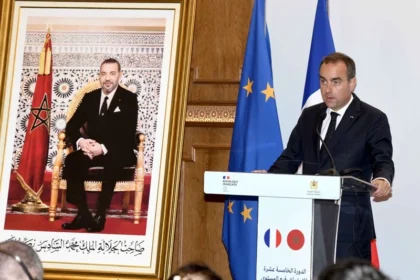
The agreement was signed by Fouzi Lekjaa, Morocco’s Minister of Economy, Finance and Public Performance, who is also the country’s governor at the AfDB, and Achraf Hassan Tarsim, the bank’s country manager for Morocco. It was one of the first major financing deals signed by Lekjaa since he took over the ministry in October.
Pillar one: more room for private investment
The programme, known by its French acronym PGRCC (support for strengthening economic governance and resilience to climate change), has two pillars. The first aims to boost private investment. It covers the restructuring of the state-owned enterprise portfolio, the modernisation of the public-private partnership (PPP) framework and further improvements to the business climate. It also includes support for small and medium-sized companies, innovation and better integration of Moroccan firms into global value chains.
These reforms echo a long-standing message from international institutions. In October, the IMF again urged Morocco to keep reducing the state’s footprint in the economy, and the World Bank has argued that Moroccan companies stay too small for too long, limiting job creation.
Pillar two: water, power and climate
The second pillar targets resilience to climate and energy shocks. It supports the modernisation of governance in the water and electricity sectors, the integration of climate considerations into public policy and a faster shift to a low-carbon economy. These are areas where Morocco is spending heavily, from desalination plants to renewable power, and where clearer rules can make it easier for private and foreign companies to take part through concessions and PPPs.
A response to the Middle East energy shock
The financing also has a short-term purpose. It falls under the AfDB’s Global Energy and Fertilizer Crisis Response Framework and is designed to help Morocco protect priority public spending from higher energy and transport costs linked to the crisis in the Middle East. In practice, it combines budget support now with structural reforms whose effects are expected over several years.
Because it builds on two earlier phases, the operation also signals continuity. Morocco’s new government has kept its predecessor’s reform agenda on state enterprises and investment, and multilateral lenders continue to back it.
Why it matters
The AfDB estimated this year that Morocco’s structural financing needs will reach about 14.9 billion dollars a year through 2030, driven by infrastructure, water, energy and preparations for the 2030 World Cup. Budget support from multilateral lenders on favourable terms helps cover part of that need. Its attached conditions, such as reforms to state companies and PPP rules, also help shape the opportunities that will open up for international investors in the years ahead.