
Morocco’s economy is expanding. Its households, by their own account, are not. That contradiction sits at the heart of a new policy paper by economist and planning researcher Amine Sami, published by the Omega Center for Economic and Geopolitical Research and reviewed by Moroccan outlet Hespress.
The paper, titled “From Economic Growth to Better Living,” asks a blunt question: why doesn’t the dynamism of Morocco’s macroeconomic indicators translate, at the same pace, into everyday life for Moroccan families?
The paradox in the numbers
Sami’s starting point is a jarring gap between two data sets. On one side, the 2024 regional accounts show a national economy growing in real terms by 4.4 percent, with GDP reaching around 1,614.6 billion dirhams. On the other, the second-quarter 2026 household sentiment survey tells a very different story: 78.3 percent of families say their standard of living has deteriorated, and only 2.6 percent were able to save anything at all. Meanwhile, 57.2 percent of citizens expect unemployment to rise.
That stark contrast, Sami writes, confirms that Morocco is producing more wealth — but the transmission of that wealth into household economic security remains uneven across sectors, geographies, and social groups.
An economy running on three engines
Zoom into the map, and the imbalance becomes structural. Three regions — Casablanca-Settat, Rabat-Salé-Kénitra, and Tangier-Tétouan-Al Hoceima — together produce 58.4 percent of national output. The three southern regions plus Drâa-Tafilalet contribute just 7.8 percent combined.
That concentration, the paper argues, leaves the Moroccan economy tethered to a handful of hubs and highly exposed to any shock affecting them. Even in fast-rising regions like Dakhla-Oued Ed-Dahab, higher GDP per capita doesn’t automatically mean higher household consumption or disposable income: a large share of value added flows to corporate profits and capital-intensive export activities, and isn’t fully reinvested into the local household economy.
Why growth doesn’t reach the fridge
Sami identifies several interlocking mechanisms behind the disconnect. GDP is not the same thing as disposable income. Capital-driven growth does not necessarily generate jobs in proportion to the investments made. And inflation muddies the picture — rising household spending often reflects higher prices rather than higher real consumption.
The consequence, he warns, is that spending is being propped up temporarily by drained savings and continued borrowing, while households’ financial security is being eroded structurally.
Multiple Moroccos, moving at different speeds
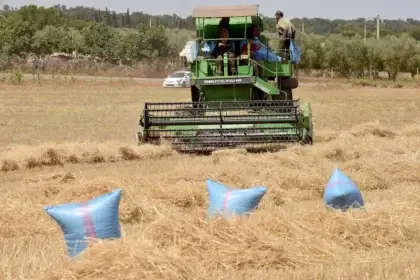
One of the paper’s central claims is that it no longer makes sense to speak of a single, coherent national economy. Instead, Sami describes a patchwork of regional economies operating at different speeds: an industrial-logistical Morocco, an administrative and services Morocco, an agricultural Morocco vulnerable to drought and climate volatility, and a maritime-Saharan Morocco on the rise in the southern regions.
Looking ahead to 2027–2035, he sketches scenarios he calls worrying: continued dominance of the major hubs and the internal migration that comes with it, or a simultaneous shock combining drought, a tourism downturn, and European protectionism. His alternative is a “green territorial transition” and a multi-polar productive economy built on smart specialization.
What to measure — and what to fix
Sami’s recommendations are as much about metrics as policy. He argues Morocco needs to measure how wealth actually reaches households, using precise regional indicators such as disposable income and savings rates, and to shift attention from the sheer volume of regional output to its quality — the jobs it creates and the value that stays local.
The decisive indicator of the future, he writes, is no longer a region’s share of national output alone, but the share of that wealth that converts inside the region into wages, skills, and local businesses. He also calls for tying investment to territorial impact and for building regional resilience indicators to shield households from over-indebtedness in the face of shocks.
The paper’s closing line frames the stakes plainly: Morocco’s strategic challenge is not simply to post high regional growth rates, but to convert that growth into sustainable local income, stable jobs, and productive consumption — a real territorial balance that shows up in citizens’ daily lives and narrows the yawning gap between the dynamism of the figures and the reality of family budgets.