
Morocco’s phosphate giant OCP is in talks with France’s EDF and Orano about producing uranium from Moroccan phosphates, a project that could turn the kingdom’s fertilizer industry into a new source of fuel for French nuclear power plants. The discussions were revealed on Friday, November 13, by an investigation in the French daily Le Monde and widely picked up by the Moroccan press.
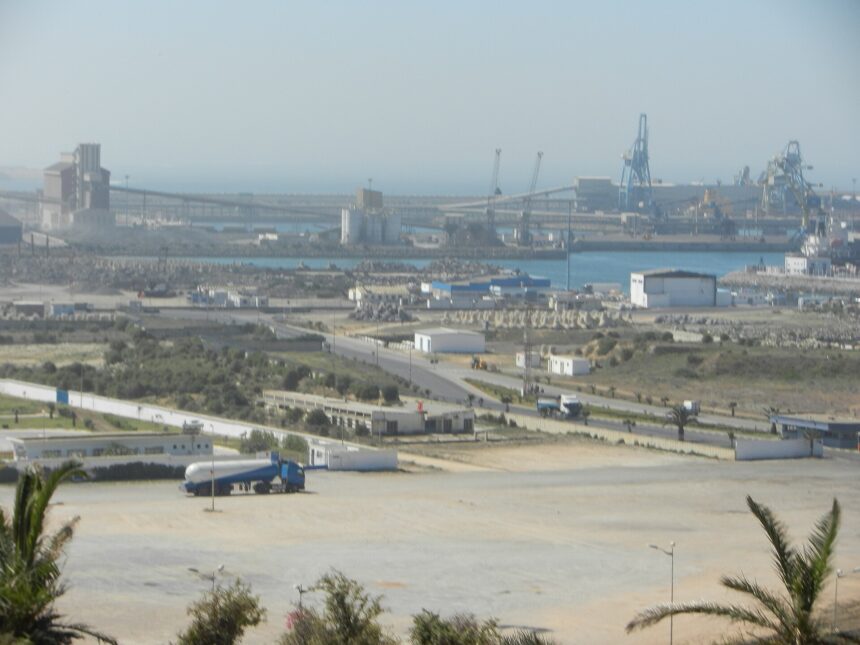
According to the report, a first plant could be built near Jorf Lasfar, on the Atlantic coast south of Casablanca, where OCP already runs one of the world’s largest phosphate processing complexes. Production of uranium concentrate, known as “yellowcake”, could start as early as 2028.
Uranium as a by-product of fertilizer
The idea is not to open uranium mines. Moroccan phosphate rock naturally contains small amounts of uranium. When the rock is turned into phosphoric acid, the raw material for most of OCP’s fertilizers, that uranium can in principle be recovered instead of being left in the acid or in waste streams.
The process is technically well known but has long been considered too expensive. The Belgian group Prayon, in which OCP is a shareholder, once recovered nearly 700 tonnes of uranium from Moroccan phosphates before stopping because costs were too high. What has changed, according to an OCP source quoted by Le Monde, is that a recent small-scale production test gave conclusive results, and the group now believes it can extract uranium at a profitable cost.
The ambition is significant. By 2030, OCP reportedly aims to produce enough phosphoric acid to recover uranium equivalent to the needs of about fifteen nuclear reactors.
A second attempt, almost twenty years later
France and Morocco have tried this before. In 2007, during President Nicolas Sarkozy’s visit to Morocco, Areva, the predecessor of today’s Orano, signed an agreement with OCP on the same idea. The project was later abandoned.
The new talks began after President Emmanuel Macron’s state visit to Rabat in October 2024, which reset relations between the two countries. In January 2026, Orano chairman Claude Imauven told the French Senate that his group was working with Morocco on recovering uranium from phosphates. Paris reportedly hopes that a memorandum of understanding could be signed during a state visit by King Mohammed VI to France, which the Élysée would like to see take place in January 2027.
Why it matters for Europe
For France, which relies on nuclear power for the bulk of its electricity, the timing is not accidental. Orano has been looking to diversify its supply after losing its mining operations in Niger, where the military government nationalised the SOMAIR mine and revoked the group’s permit. A Moroccan source would add a supplier located close to Europe, in a country with which Paris now has a strong political relationship.
For Morocco, the project fits OCP’s long-standing strategy of extracting more value from each tonne of phosphate rock. Uranium would add a strategic, high-value by-product to that list and give Rabat another card to play in its relations with Europe.
What to watch
Nothing has been signed yet, and several questions remain open. The companies have not published any figures on investment, output or pricing. Uranium recovery also requires specific regulatory and safety frameworks, as well as international safeguards on the handling of nuclear material. And previous attempts show that the economics depend heavily on uranium prices, which have risen strongly in recent years but remain volatile.
The next milestone is political. If King Mohammed VI’s state visit to Paris goes ahead early in 2027, it will be the moment to see whether OCP, EDF and Orano are ready to turn talks into a formal commitment.