

Seventy years after Switzerland first opened a legation in Rabat, relations between the Alpine confederation and the North African kingdom are enjoying their strongest momentum in decades. Trade jumped by about a third in 2025, Bern has made Morocco a priority country for its economic cooperation, and the two governments have deepened their dialogue on everything from migration to the Western Sahara dispute.
A century-old presence
Swiss ties with Morocco predate Moroccan independence. The first Swiss merchants settled in Tangier at the end of the 19th century, and Switzerland opened a consulate in Casablanca in November 1921, later moved to Rabat in 1947. When Morocco became independent in 1956, Switzerland recognised the new state and opened a legation in Rabat, which was upgraded to an embassy in 1960. The year 2026 therefore marks the 70th anniversary of diplomatic relations.
The human links remain modest but steady. According to the Swiss Federal Department of Foreign Affairs, 1,711 Swiss citizens were living in Morocco in 2026, while the number of Moroccans living in Switzerland rose from about 1,000 in 1980 to 7,299 in 2020. Morocco is also a popular holiday destination for Swiss travellers, with direct flights linking Swiss airports to Marrakech and other Moroccan cities.
Trade near the one-billion-franc mark
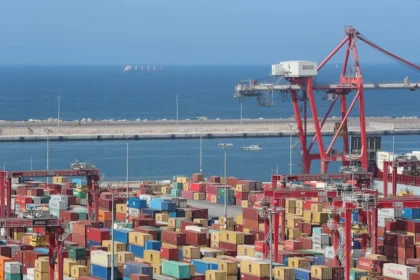
The economic relationship is where the change is most visible. According to Swiss government figures, bilateral trade reached 980 million Swiss francs in 2025, up about 33% from 2024. Imports from Morocco amounted to 511 million francs, against 469 million francs of Swiss exports, meaning that Morocco now sells more to Switzerland than it buys. Morocco is Switzerland’s third-largest trading partner in Africa.
More than 60 Swiss companies operate in Morocco, employing around 8,000 people directly. Nearly 40 agreements frame the economic relationship, including the free trade agreement between Morocco and the European Free Trade Association (EFTA), of which Switzerland is a member, and a bilateral investment protection agreement. At an “Invest in Morocco” event held in Geneva in June 2026, Moroccan officials presented the kingdom’s automotive, aerospace, pharmaceutical and renewable-energy sectors to Swiss investors, while Swiss speakers described Morocco as a platform for reaching African markets.
Since January 2025, Morocco has also been a priority country for Swiss economic development cooperation, under a 2025–2028 programme aimed at supporting a more competitive, sustainable and inclusive economy. A bilateral climate agreement signed in 2022 allows Switzerland to offset part of its emissions through projects in Morocco, while a science and innovation memorandum signed the same year funds joint research projects.
Migration: the most delicate file
Migration has long been the most sensitive issue between the two countries, and also the one where cooperation has advanced most quickly. A migration dialogue launched in 2023 focuses in particular on the return of Moroccan nationals who have no right to stay in Switzerland. On 22 May 2026, Switzerland’s State Secretary for Migration, Vincenzo Mascioli, signed an agreement in Rabat that is expected to cut the time needed to identify returnees from 150 to 30 days.
According to Swiss media reports relayed by Morocco World News, around 353 Moroccans were required to leave Switzerland in the summer of 2026, and the State Secretariat for Migration said forced returns in the first half of the year nearly equalled the total for all of 2025. Switzerland also chairs the Rabat Process in 2026, the Euro-African dialogue on migration launched in Morocco in 2006, and the two countries plan to mark its 20th anniversary together. Bern, for its part, funds projects in Morocco to protect migrants and promote local employment.
A shift on Western Sahara
The political highlight of the year came on 24 April 2026, when Moroccan Foreign Minister Nasser Bourita was received in Bern by Federal Councillors Ignazio Cassis and Beat Jans. In a joint communication, Switzerland welcomed UN Security Council Resolution 2797, which states that genuine autonomy under Moroccan sovereignty could be one of the most feasible solutions to the Western Sahara dispute. Switzerland continues to support the UN-led process and reiterated the importance of the right to self-determination, but Rabat welcomed the statement as a further sign of growing international support for its autonomy plan.
What it means for business
For Swiss companies, the combination of political stability, trade agreements and large infrastructure projects ahead of the 2030 World Cup makes Morocco an increasingly attractive base, both as a market and as a gateway to Africa. For Morocco, Switzerland offers capital, technical expertise in areas such as precision industry, finance and vocational training, and a source of high-value tourism. With the economic relationship approaching the symbolic one-billion-franc threshold, both sides are using the 70th anniversary to signal that they intend to go further.
Photo: Axel Tschentscher / Wikimedia Commons (CC BY-SA 4.0)